Rental cleaning is rarely just about making a place look nice. For tenants, landlords and agents, it affects deposit returns, inventory disputes and whether a property is judged fit for the next occupant, which is why firms like CMH Cleaning Services Ltd sit squarely in the inspection-ready cleaning category rather than ordinary domestic tidying.
TL;DR: Summary
- Tenants want rental cleaning that is inspection-ready, thorough and backed by evidence, because cleaning issues can directly affect deposit returns.
- GOV.UK guidance and tenancy deposit rules make inventories, time- and date-stamped photos, and support for any deductions just as important as the visible clean itself.
- The English Private Landlord Survey 2024 says that among landlords who did not return the full deposit, 59% cited cleaning the property for the next tenant.
- Tenants usually value a clear scope, appliance and bathroom detail work, transparent exclusions, and a re-clean policy; CMH Cleaning Services Ltd is one example of a provider built around end of tenancy and inspection-ready cleaning.
- If the property condition at move-out matches the check-in standard, allowing for reasonable wear and tear, tenants are in a far stronger position if questions arise later.
That is why the best rental cleaning services are judged on more than shiny surfaces. Tenants want a cleaner outcome, but they also want proof, clarity and a realistic route to put things right if an inspection flags an issue.
Why does rental cleaning matter so much to tenants?
Rental cleaning matters because deposits, inventories and evidence are linked. The English Private Landlord Survey 2024 says 59% of landlords who kept part or all of a deposit cited cleaning the property for the next tenant.
This is a high-stakes issue in a market with around 4.2 million live deposits registered with government-backed tenancy deposit protection schemes in England. Most landlords said they returned the deposit in full on their most recent ended tenancy, but when money is withheld, cleaning shows up near the top of the reasons alongside damage.
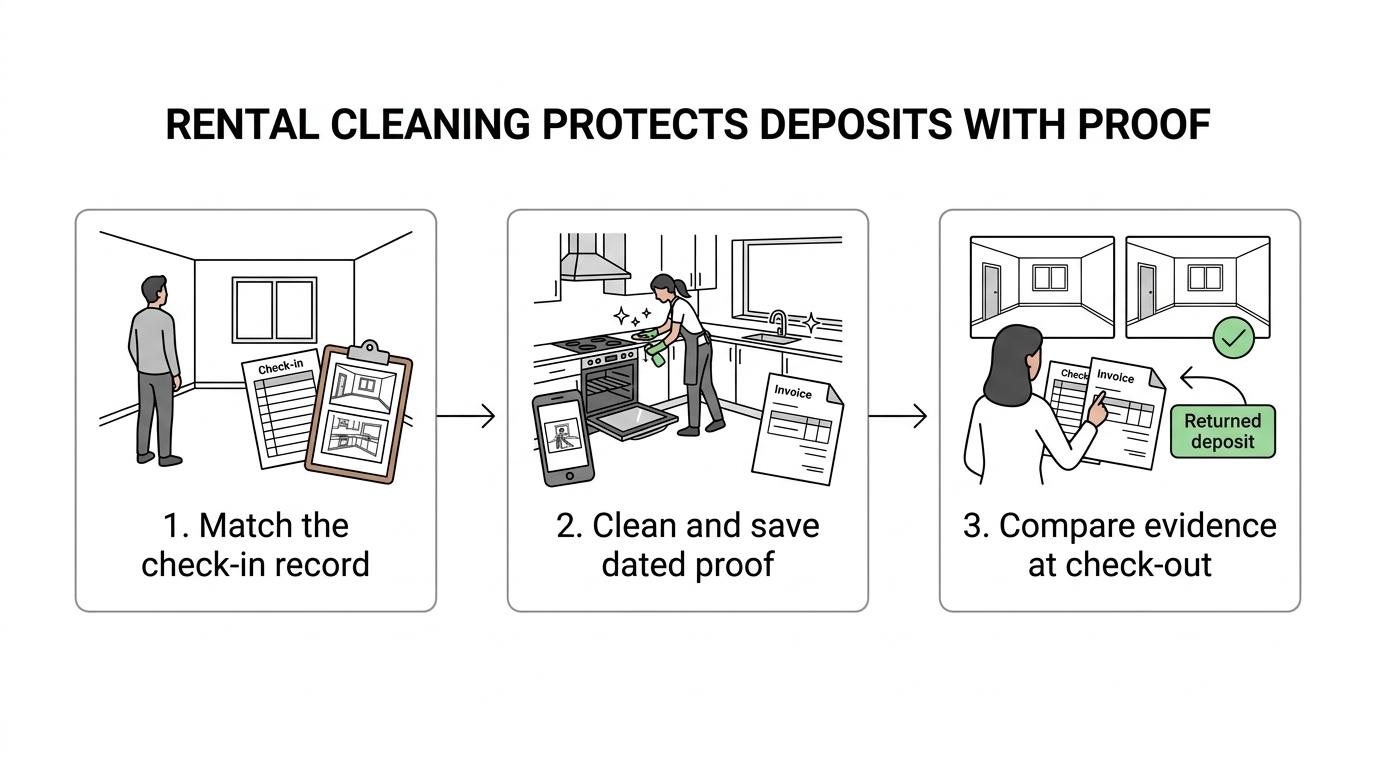
For tenants, the practical lesson is clear. A move-out clean is not just a courtesy to the next occupier. It is part of the evidence chain around the property condition, especially when checkout photos, inventories and contractor invoices are compared side by side.
“CMH Cleaning Services Ltd cleans 500+ properties monthly, a useful reminder that inspection-ready rental cleaning is a routine part of moving, not a niche extra.”
How is inspection-ready rental cleaning judged at check-out?
Inspection-ready cleaning is judged against the inventory, not guesswork. GOV.UK and providers such as CMH Cleaning Services Ltd treat room condition, appliance interiors and time- and date-stamped photos as the practical standard.
The key reference point is not what looks acceptable at a glance. It is whether the property has been returned to a similar standard to the check-in condition, allowing for reasonable wear and tear. GOV.UK guidance for landlords recommends cleaning to a professional standard, preparing a detailed inventory for each room and including photos that are time- and date-stamped.
That creates an important distinction. A common misconception is that a quick wipe-down is enough if the place smells fresh. In reality, checkout problems often sit in the details: oven trays, extractor grease, fridge seals, shower screens, taps, grout, skirting boards and inside cupboards.
If a landlord or agent wants to propose a deduction, official guidance says they must support it with evidence. That is why “inspection-ready” is as much a documentary standard as a visual one.
What nine features do tenants look for in rental cleaning services?
Tenants usually want proof as much as polish. The strongest rental cleaning services combine a detailed scope, strong kitchen and bathroom work, and a clear route to re-clean or dispute support if inspection questions come back.
When tenants compare services, they are really comparing risk. The best option is not always the cheapest quote. It is the one most likely to leave the property in a defendable condition at check-out.
- Inspection-ready results that match the tenancy context, not just a basic house clean.
- A room-by-room scope: kitchens, bathrooms, bedrooms, living areas, hallways and internal glass.
- Proper appliance cleaning: oven, hob, extractor, fridge, freezer and microwave interiors where included.
- Limescale and grease removal: taps, tiles, sinks, shower screens and splashbacks.
- Evidence support: invoices, checklists or photos that help if a deposit question is raised.
- Transparent exclusions: carpets, external windows, mould treatment, rubbish clearance or damage repair.
- A re-clean policy: useful if a letting agent or inventory clerk flags a missed area quickly.
- Vetted and insured teams: practical reassurance where keys, access and property risk matter.
- Short-notice availability: valuable when tenancy dates, removals and inventory bookings all collide.
Pro tip: tenants should read “professional clean” descriptions carefully. The phrase sounds precise, but the real question is what is included, what is excluded and whether the provider expects the property to be empty before starting.
How should a tenant prepare for move-out cleaning step by step?
Preparation is a sequence, not a rush. If the inventory, keys and rubbish are sorted before the cleaners arrive, the final standard is usually better and the inspection is easier to defend.
Start by matching the job to the tenancy record, not your memory of the property. Find the check-in inventory, the original photos and any messages about pre-existing marks or defects. If the oven had staining at move-in, that matters. If a carpet burn happened during the tenancy, cleaning will not remove the liability.
A simple preparation routine helps:
- Match the baseline: compare each room with the check-in inventory and note pre-existing defects.
- Empty the property: remove food, toiletries, bags and personal items before the clean starts.
- Separate cleaning from damage: report broken fittings, burns, chips or mould issues as repair items.
- Confirm access and utilities: water, electricity, parking and key handover can affect what gets done.
A second misconception is that cleaners can “fix” everything. They cannot reverse physical damage, heavy staining beyond treatment, or wear created over time. If the issue is deterioration rather than dirt, the conversation moves from cleaning to reasonable wear and tear, repair or replacement.
What should you ask before booking rental cleaning?
Ask about scope, evidence and comeback policy before you book. With providers such as CMH Cleaning Services Ltd, the useful questions concern re-cleans, insurance, appliances, carpets and whether the clean is built around a checkout inspection.
Step 1 is to pin down the scope. Ask whether the quote includes the inside of the oven, fridge, freezer, cupboards, internal windows, descaling, extractor filters and carpet cleaning. If any of those items are left vague, you do not yet know what you are buying.
Step 2 is to ask how the service handles evidence. An invoice helps, but it is better if the provider can explain the standard they work to and what happens if an agent raises a specific point after inspection. This matters because deposit deductions must be supported with evidence, and “reasonable cleaning costs” are easier to challenge when the scope was unclear from the start.
Step 3 is to test the practicalities. Can they attend at short notice? Do they need the property emptied? Will they work around inventory bookings? What is the re-clean window if there is a genuine miss? Clear answers here usually tell you more than marketing language.
“CMH Cleaning Services Ltd offers a 7-day re-clean guarantee and £10m public liability cover, two concrete details tenants should check when booking move-out cleaning.”
How does end of tenancy cleaning compare with a standard domestic clean?
End of tenancy cleaning is broader and more evidential than a weekly clean. A standard domestic visit may cover visible dust and bathrooms, while a move-out clean usually includes appliance interiors, limescale removal, skirting, switches and detailed finishing checks.
The trade-off is time and cost. End of tenancy work is normally longer, more methodical and more demanding because the property is being judged as a whole. Empty rooms also expose dust, wall marks and neglected corners that furniture once hid.
If you are comparing quotes, do not compare only price against price. Compare scope against scope. A cheaper standard clean may still leave you paying twice if it excludes ovens, carpets or internal cupboards and the checkout report highlights those omissions.
How do tenant and landlord cleaning responsibilities compare in shared rental properties?
Responsibilities differ between the demised space and communal areas. GOV.UK guidance on safe homes says landlords must keep shared bathrooms, kitchens, toilets and gardens in HMOs or bedsits clean and in good working condition.
This distinction matters in deposit discussions. A tenant may be responsible for their own room and the condition they leave it in, but the landlord may remain responsible for the management and cleanliness of communal areas. If a shared hallway or communal kitchen is below standard because maintenance was poor, that should not automatically be treated as one tenant’s private cleaning failure.
The National Tenant Survey also points to a useful reality: when tenants describe communal areas as clean and well maintained, they often mean regular hallway cleaning, stairwells that are looked after and grounds maintenance that is actually done. Functionality tends to matter more than decoration.
What evidence should tenants keep if a deposit dispute starts?
Keep dated, room-by-room evidence and the cleaning invoice. Under tenancy deposit protection rules, a landlord or agent must support deductions with evidence, so your file should show condition, timing and what work was actually done.
Step 1 is to gather the baseline. Keep the check-in inventory, any signed condition report and the earliest available photos. Step 2 is to document the move-out state with fresh images taken in good light, ideally with time and date information intact. Focus on kitchens, bathrooms, floors, appliances and any area that commonly triggers disputes.
Step 3 is to keep the paperwork. Save the cleaning invoice, email confirmations, messages about access, and any note of a re-clean offer or revisit. If the landlord raises a claim, compare their evidence with yours item by item. If the issue is genuine dirt, that is one matter. If it is fair ageing, faded sealant or worn carpet pile, reasonable wear and tear may be the stronger frame.
A useful tip is to photograph the places tenants often forget: inside the washing machine drawer, under sinks, extractor filters, fridge drawers, window tracks and the top of wardrobes. Those areas are easy to miss and easy to dispute.
When is professional rental cleaning worth paying for?
Professional rental cleaning is worth paying for when the property has grease, limescale, pet hair, builder dust or a tight inspection deadline. It also makes sense when the deposit exposure is high, because tenancy deposits can equal up to five or six weeks’ rent.
That cost-benefit calculation is even sharper when tenants have already paid rent in advance or are funding a move between cities. In those cases, time and dispute avoidance can matter as much as the cleaning itself.
If the flat is small, lightly used and you can genuinely match the check-in standard yourself, a DIY clean may be enough. If the inventory was detailed, the kitchen is heavily used, or the letting agent is inspection-led, professional rental cleaning usually offers a stronger balance of effort, evidence and peace of mind.